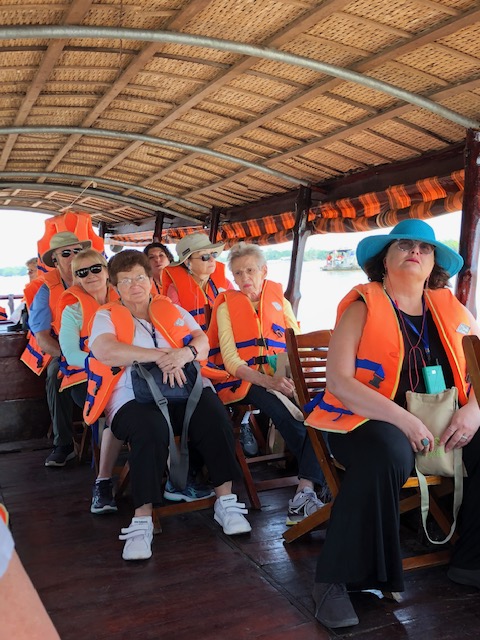
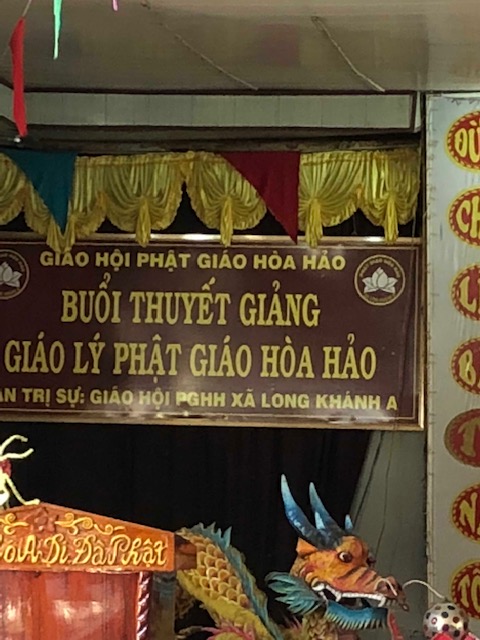
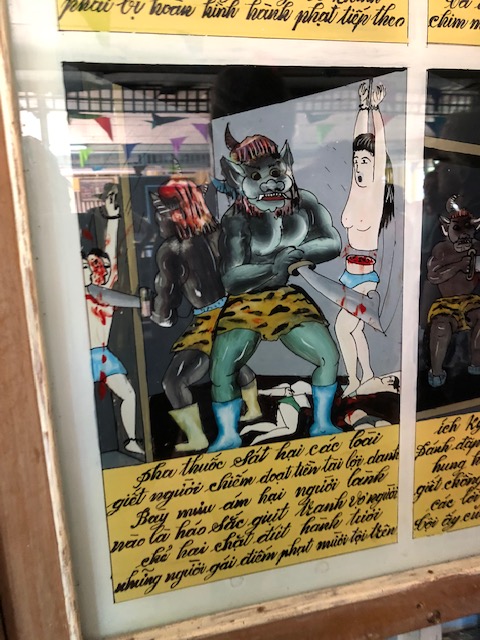
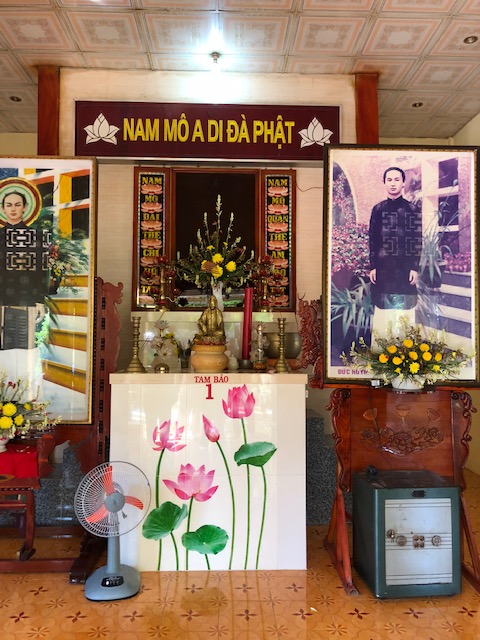
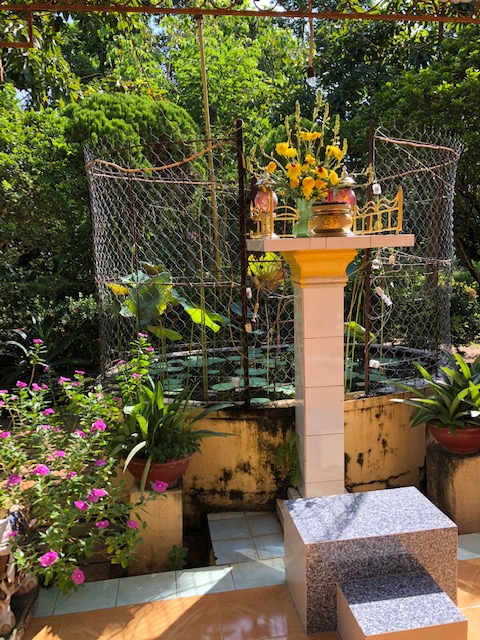
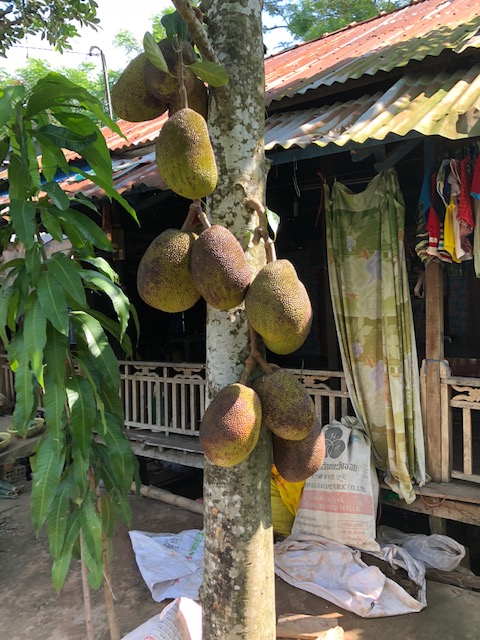
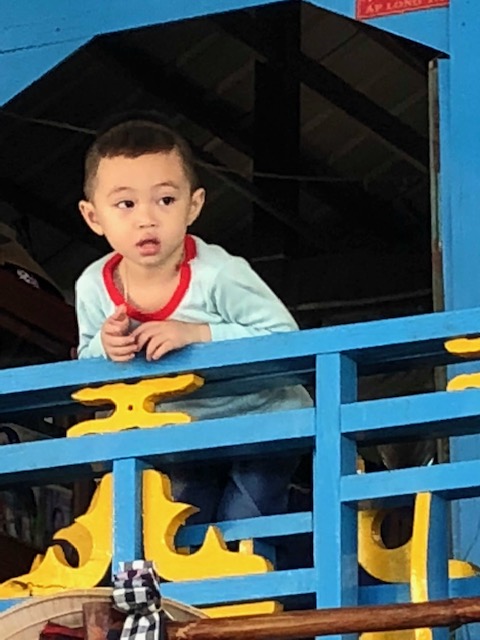
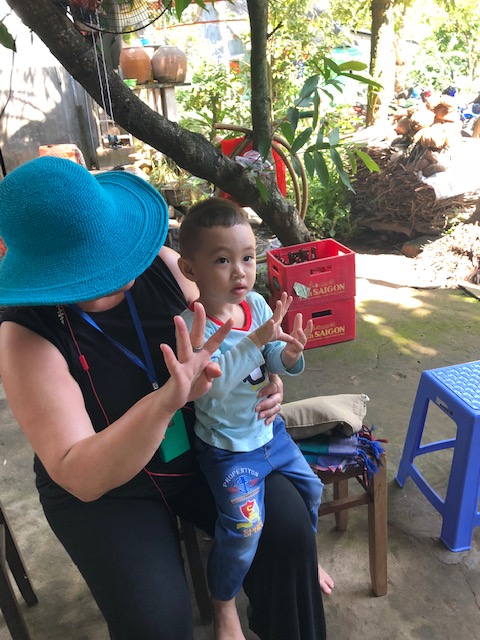
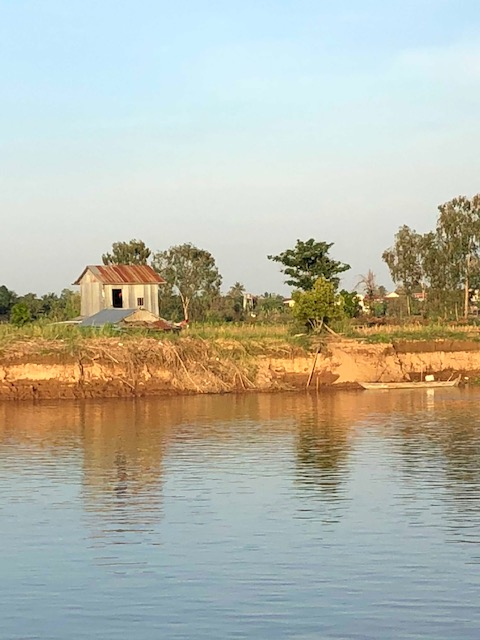
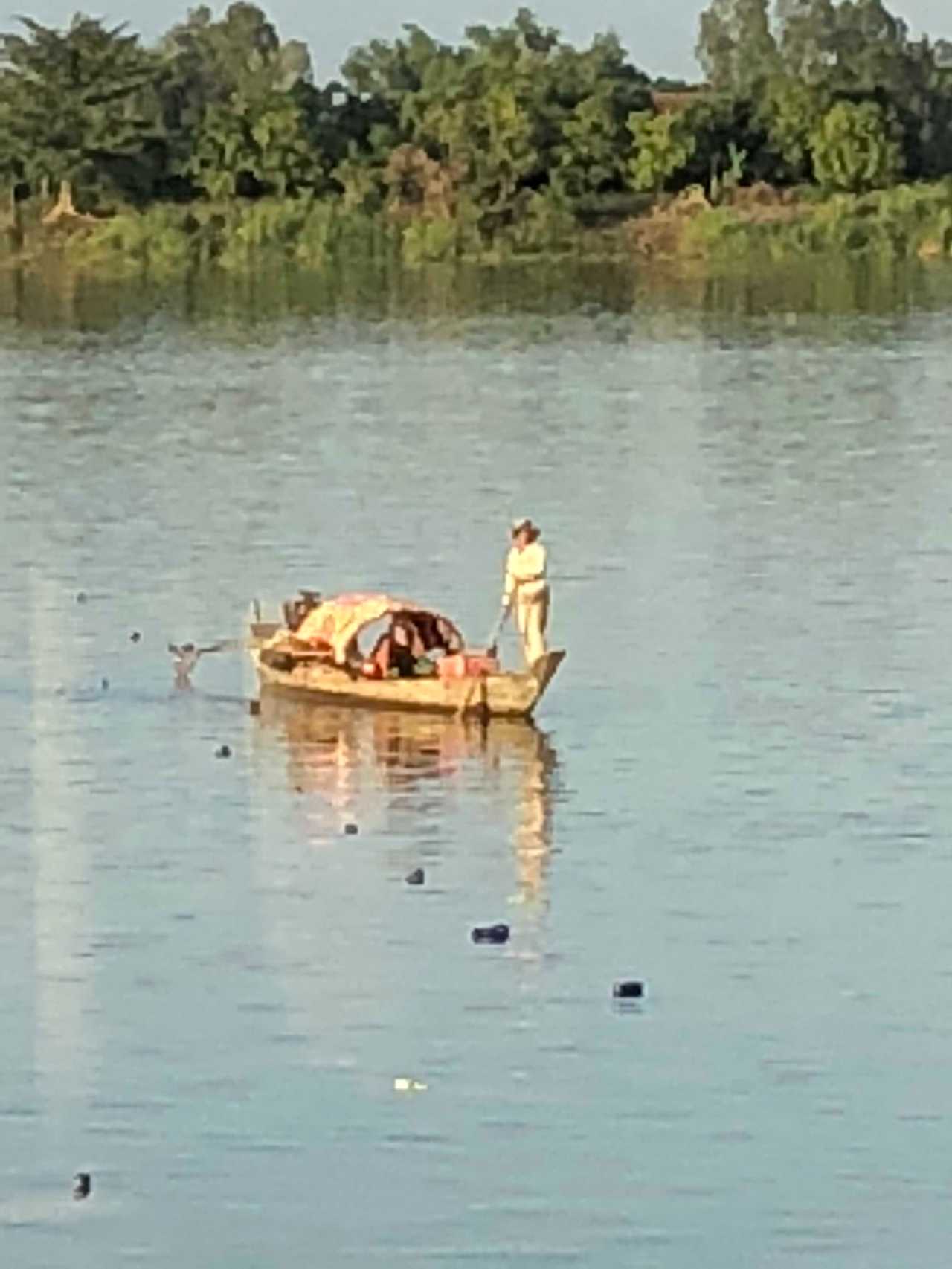
This is our last day in Vietnam, and we started it with a tour of Long Khanh Island at 8:30 am. A friend was saying that our tours seemed to start very early, but it’s much better to start early than to start when it’s in the 90s in the afternoon. We come back drenched at 10 am as it is; we might not come back at all if we waited until noon to go out. On the outside of the island is a disappearing island that only appears during the dry season and has a short growing season (now). Short crops and fish farms are grown on it. Before communism, families owned specific plots and passed them along to their children. Now, the local government passes the plots along to those who need the income the most. (So we’re told.) We walked through the village and saw most homes on stilts and most graves raised several feet because the water comes up quite high during rainy season. Most of the people on the island belong to the Hoa Hao Buddhist religion, which was started by a young monk who disappeared, but whose belief was all about helping people. (They also have some illustrations on the wall of the results of bad karma.) They are primarily vegan, but might raise goats or sell eggs or milk to make money for the temple. We visited the local temple that is dedicated to him. The Hoa Hao sect is one of the largest growing Buddhist sects. Along the way, we saw a moving market – a cart with vegetables that is moved from place to place for people who didn’t make it to the large market.
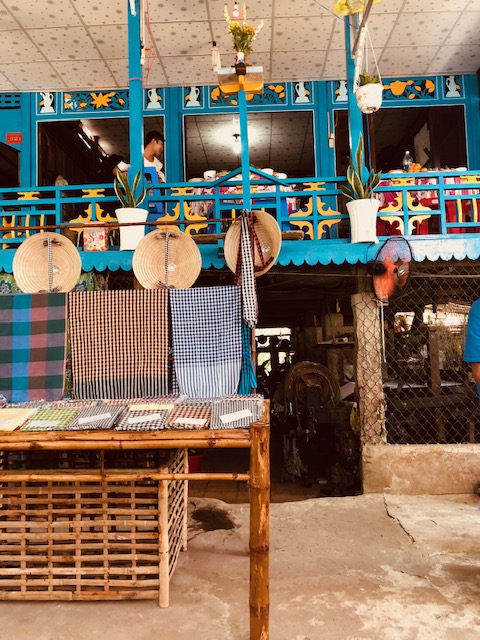
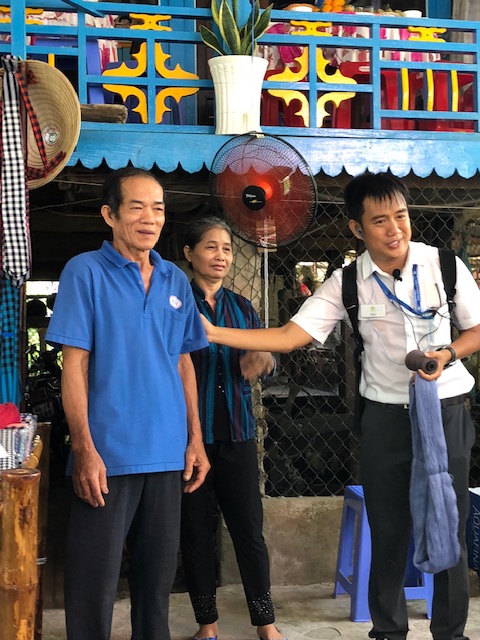
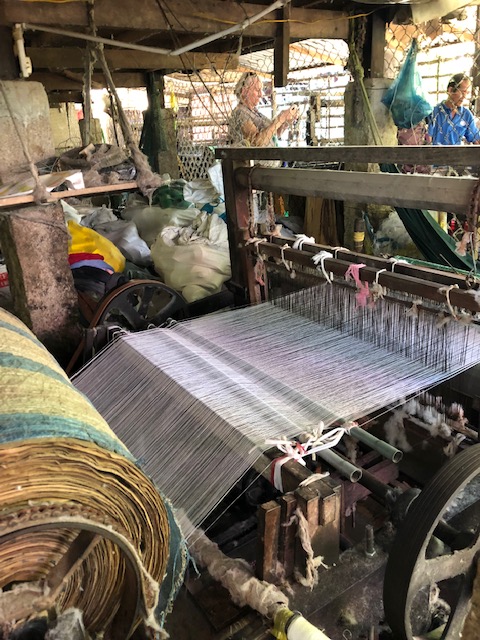
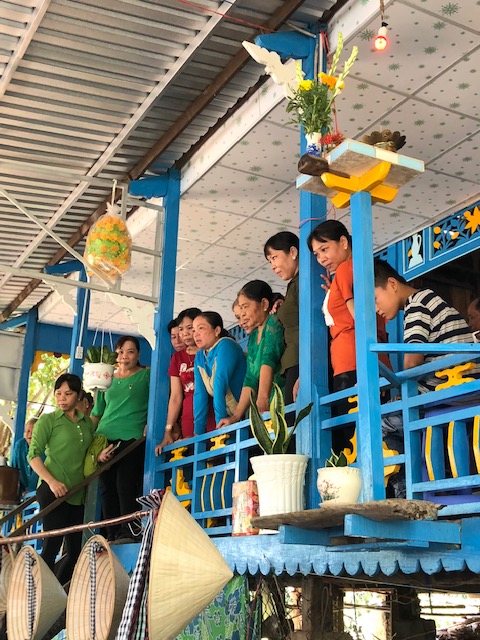
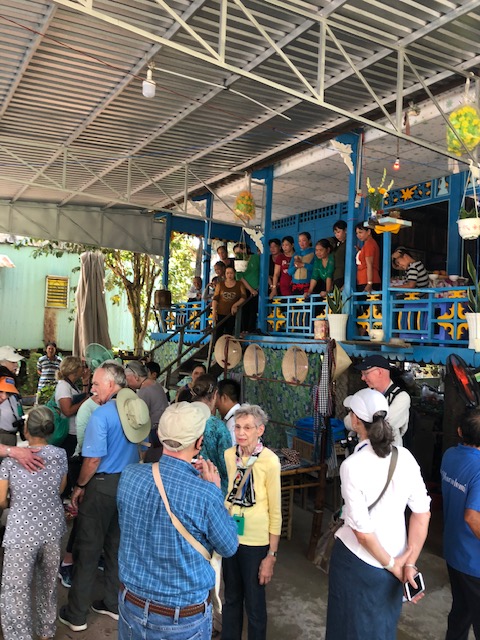
Our final destination was a family that ran some weaving looms. There are 70 families on the island that are involved in the production of scarves. The thread (60% cotton and 40% synthetic) is imported from Hanoi, then pulled into skeins, then covered with rice powder, then dyed with local colors, then prepared for the looms, then woven into scarves. The patterns started as traditional Khmer patterns and colors, but have branched out. They had two sizes available for $3 and $7 to us, but wholesale most to markets and fashion houses. The father has two daughters who want nothing to do with the business, but is excited to have a 21-year old son who is willing to stay on the island and continue it. There are only tourists about twice a week on this island, so a lot of the locals were there to see us. We were their entertainment for the week, and we definitely helped their daily economy.
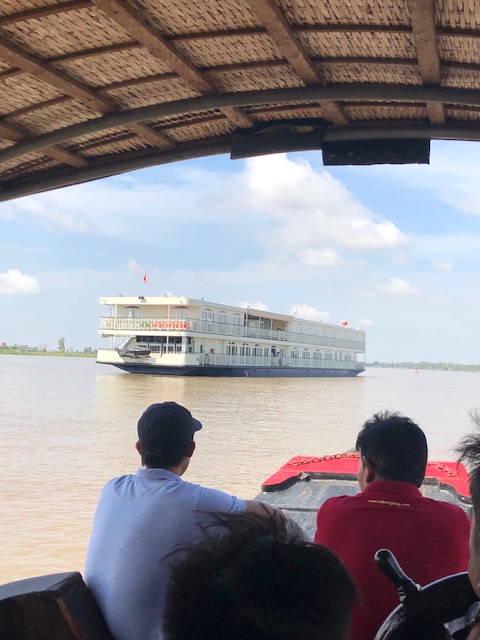
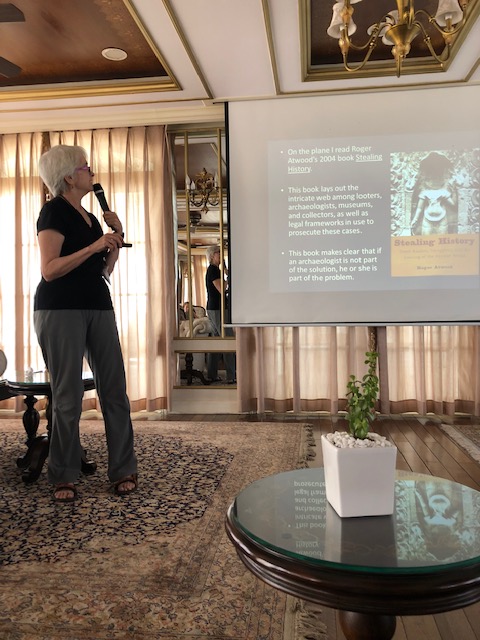
This was our last trip with Hai, because we entered Cambodia waters and he headed back to Saigon, as we headed to Phnom Penh. At 11, we had another lecture by Joyce on “Hot Pots, Museum Raids, and the Race to Uncover Asia’s Archaeological Past”. I added some photos of our typical lunch buffet because I’d forgotten to previously. In the afternoon, there was a tropical fruits demonstration of carving and tasting, and a showing of “The Killing Fields”.
Cheryl







 Tom and Cheryl Travels
Leave a comment